


There was already a connection when I first saw the lineup for the Galle Literary Festival… our names, which give away our Punjabi roots. Every year, in the coastal city at the tip of Sri Lanka, there is a celebration of arts, literature, and identities, and I seek out Punjabis. It is personal, because while I have made this land my home, there is always a tug from the land where I was born, and where my parents still live. It is also special because I get to explore the rich tapestry of our Sikh Heritage and the diasporic Punjabi experience. My conversations with acclaimed writer Sathnam Sanghera and renowned chef and author Ravinder Bhogal are about belonging, resilience, and the enduring ties that keep diasporic Punjabis rooted, no matter how far from home we may be.
Sathnam Sanghera Interviewed by Artika Aurora Bakshi at the Galle Literary Festival 2025
On Belonging and Connection to Punjab…
I usually say I’m from London or Wolverhampton because these cities are so diverse that it doesn’t really matter. When traveling, saying I’m from London is a good shortcut for people to understand. Yes, I have a deep connection to Punjab. Punjabi was my first language, though I didn’t speak English until I was about five. I grew up in Punjabi culture, and my parents still speak Punjabi. My parents miss Punjab, but they rarely go back. They associate it with political and family tensions. However, they remain connected through Punjabi TV channels and religious nostalgia, especially for places like the Golden Temple.
Punjab Today…
Punjab has social issues, including drug addiction and alcoholism, which affect many families. There are also political and social troubles that make the situation challenging.
Sikh Values, and Being a Sikh…
Family is very important to me. I also strongly believe in Guru Nanak’s teachings on equality and fighting injustice. Even though I don’t wear a turban, I consider myself Sikh because I uphold these values. Some people think that if you don’t wear a turban, you’re not Sikh, which can be frustrating. I believe in Sikh values, and that’s what matters most to me. I wear a kara, and I had it engraved with a line from the Guru Granth Sahib: ‘Recognise the human race as one’. It serves as a reminder to treat everyone equally.
The Connection to Roots…
My work focuses on fighting injustice and bringing people together rather than dividing them. My research on the British Empire has led to difficult conversations, but I see that as part of the Sikh principle of standing up for justice.
Immigrants and the Battles They Fight…
Each generation faces different struggles. My parents’ generation experienced explicit racism, job discrimination, and housing exclusion. While some of that has improved, Sikhs are still underrepresented in politics and media. Newer immigrants face general hostility toward immigration, which isn’t always racial but affects everyone, including Punjabis. It’s not as bad as in Europe, where places like France ban religious head coverings.

In the UK, Sikhs have fought for their rights, such as being able to wear a turban on a motorbike. However, there is still some misunderstanding, and people sometimes mistake Sikh men for fundamentalist Muslims. Many immigrants remain stuck in the version of Punjab that existed when they left. For example, some in Wolverhampton still hold values from 1950s Punjab, even though Punjab itself has changed. This is common in immigrant communities worldwide. My advice to people who immigrate is to learn the language. Holding on to your culture is fine, but without learning the local language, you can’t fully participate in education, jobs, or even your children’s lives.
The Sikh Principle of Seva (selfless service) During COVID–19…
Sikh charities did amazing work as first responders. It was great to see seva gaining global recognition. However, in the past, a lot of Sikh community donations focused on building more temples instead of helping people directly. I would love to see more of that change.
Mental Health Awareness in the Punjabi Community…
There’s still a huge stigma. Many in the diaspora and in Punjab still attribute mental illness to black magic rather than seeing it as a medical condition. India also has very poor psychiatric care, with far fewer professionals compared to Western countries. There are some charities working on this issue, but a lot more needs to be done.
The Treasures Abroad…
It should be decided on a case–by– case basis. Some artefacts were taken unfairly, while others were gifted or bought. The Kohinoor is complicated because multiple countries–India, Pakistan, Afghanistan, Iran–claim it. If it were returned, who would it rightfully belong to? Many religious and cultural items from Maharaja Ranjit Singh’s treasury were taken, including Guru Gobind Singh’s weapons and relics of the Prophet Muhammad. Some of these went missing because the British didn’t value them properly. Seeing Ranjit Singh’s throne in the Victoria & Albert Museum is emotional, because it tells a story of an empire that once was. Ranjit Singh’s empire was based in Lahore, but Amritsar was the spiritual center. If the artefacts went to Pakistan, most Sikhs wouldn’t be able to see them due to visa restrictions. Sadly, many historic buildings and artefacts in Punjab have been destroyed due to neglect and lack of funds, and even awareness. Too many places are being modernized without care for their historical significance. Before we talk about what should and what shouldn’t be returned, we should first look at preserving what we still have.
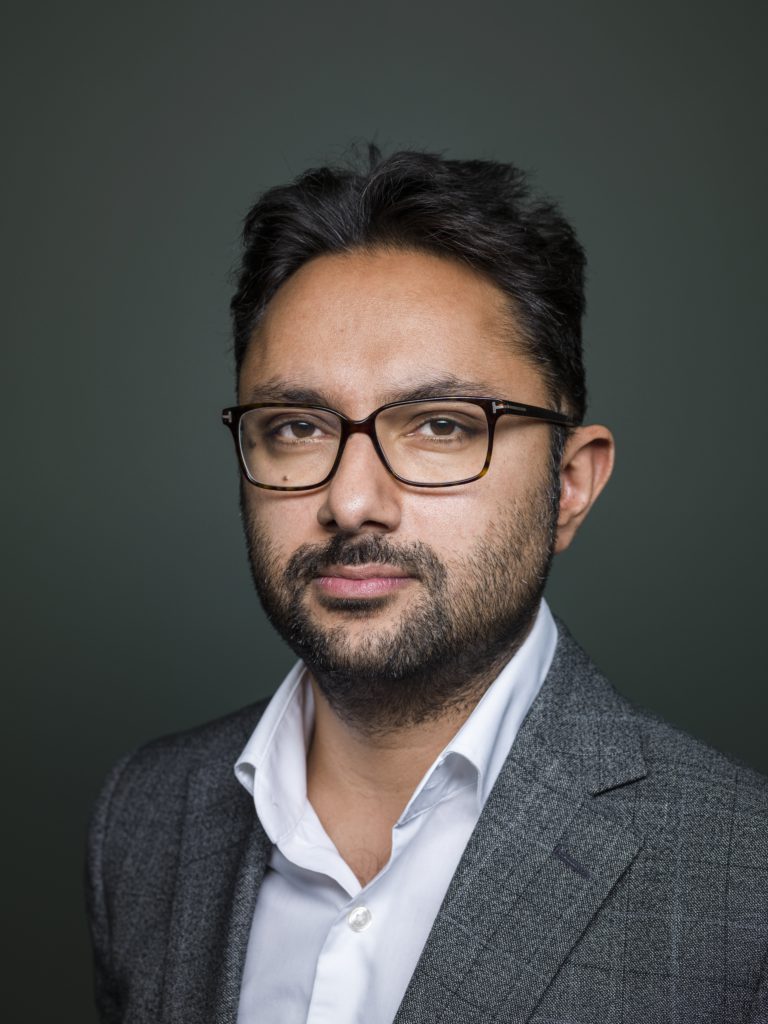
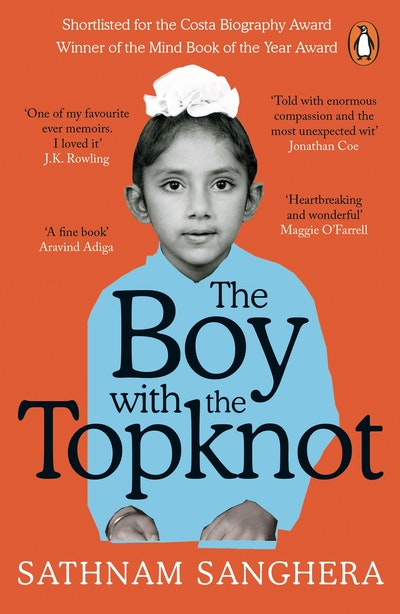
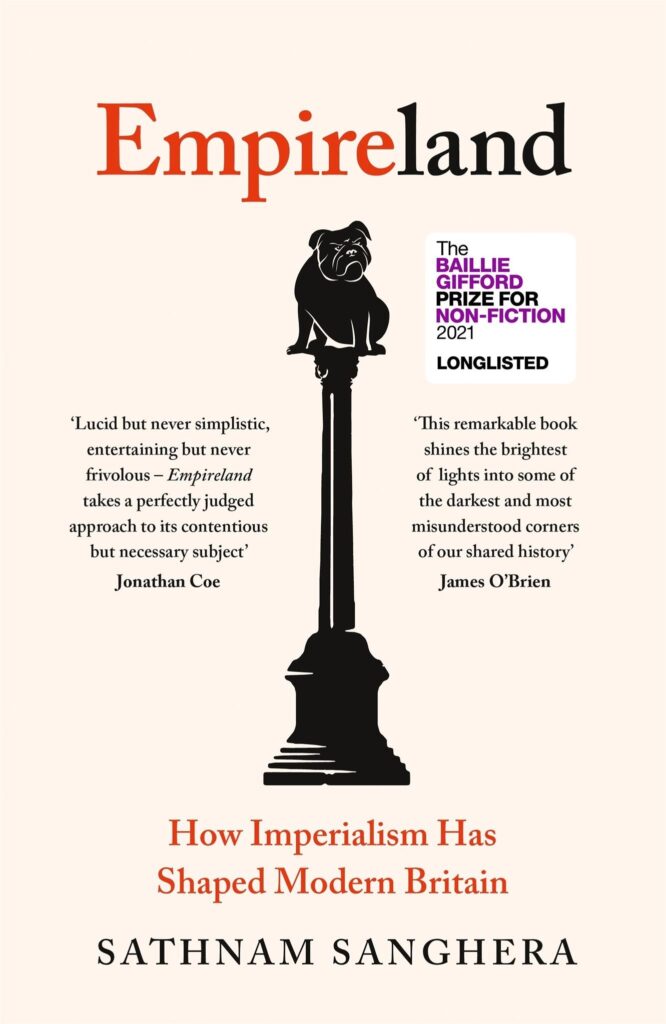
Sathnam Sanghera is the Sunday Times bestselling author of Empireland: How Modern Britain is Shaped by its Imperial Past, memoir The Boy With The Topknot, and novel Marriage Material. The highly– anticipated, acclaimed sequel to Empireland, Empireworld: How British Imperialism Has Shaped the Globe is available now. More on www.sathnam.com
Ravinder Bhogal Interviewed by Artika Aurora Bakshi at the Galle Literary Festival 2025
From Punjab to East Africa…
My grandfather and his brother decided to leave Punjab in the early 1940s, in search of a better life. They were young, already married, but felt they needed more. Punjab was quite provincial at the time, and they wanted opportunities beyond what was available.
The story goes that they ended up in Bombay, where they saw ships sailing to Kenya. These were migrant boats back then, and they decided to take a chance. But their first attempt was disastrous—the ship sailed for 26 days and had to return to Bombay.
My grandfather’s brother swore never to leave land again, but about a month later, my grandfather decided to try once more, this time alone. He boarded another ship in the dark and eventually arrived in Mombasa, Kenya.
He fell in love with the land—the red earth of Kenya, the richness of the soil. He started farming and working in construction. He saw potential where others saw barrenness. He had such a deep, almost spiritual connection with the land, which I think came from his Sikh values.
It’s as if he prayed life into it, and under his careful hands, it flourished. He embraced it fully. He learned the language, became a well–known figure in the Kenyan–Punjabi community, and built strong connections with the local people.
Seven years later, my grandmother joined him. She had never left her village before, so the thought of moving to Kenya was terrifying for her. She was raised by her mother with four sisters and married my grandfather when she was just 13. But she adapted—she learned Swahili and found ways to use indigenous ingredients in Indian cooking.
Influences…
From my grandfather, I picked up love and respect for the land. At my restaurant, we work with a biodynamic farm that focuses on soil diversity and sustainability. My grandfather lived so gently, and that has shaped my approach to hospitality—respecting nature, taking care of people, and being mindful of the impact we have. He also taught me the importance of seva—selfless service. He always said, “The easiest way to do seva is to feed people.” He supported many charity initiatives, including eye camps in Kenya, where he would provide food for patients and volunteers.
Food was his way of bringing people together. Three years ago, we decided to go carbon neutral. We became the first independent restaurant in the country to be officially carbon neutral certified. Every year, we work to reduce our carbon footprint, with the ultimate goal of reaching zero waste. We waste almost nothing. We’re very precise with portions, and whatever is left over gets repurposed or donated. Throwing food away would be unthinkable—my grandfather would have been furious if we ever wasted food. My cooking has been influenced by my mother, who was the cook in the family. She lost her own mother at two years old, and her stepmother made her work in the kitchen and care for her younger brothers. Because she wasn’t allowed an education, cooking became her entire identity. She hated when we ate out—it made her feel like her role was being diminished. But she had an incredible ability to cook for five or fifty people without any stress. Everything I know about food, I’ve learned from her.
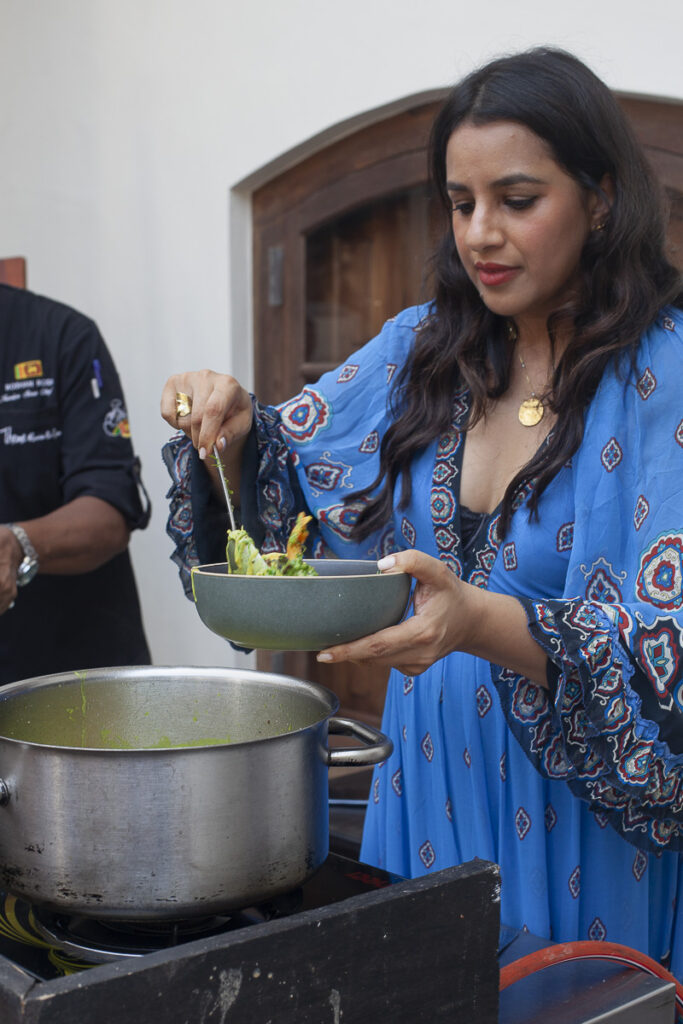
I consider myself East African, Indian, and a Londoner. London, especially, shaped me through its immigrant communities—growing up among Turkish, Polish, Iranian, Chinese, and Nigerian neighbours made me who I am today. With immigrants, food is usually the last thing to go. Language, clothing, even religious traditions might fade over generations, but food remains. It’s with immigrant food that you hold on to your traditions, while embracing what’s available in your new home. You weave together the familiar and the new, creating something completely unique.
Family and Food…
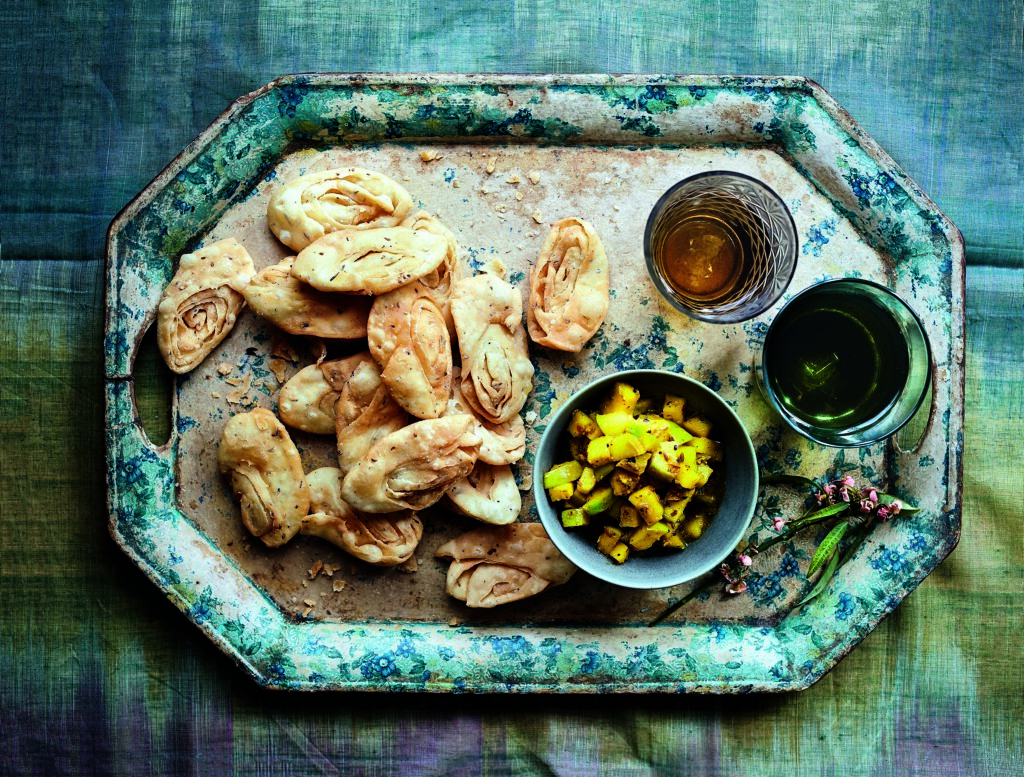
Achar (pickles) has always been a big part of my life. We had an acharwali maasi (pickle–making aunt) who was known for her achars. I love achar— it brightens every meal. In India, we would use raw mangoes, but in the UK, they’re expensive, so I make achar with Bramley apples. They have the same tartness and texture as raw mangoes. We serve apple achar, and we also make mathis—a classic Punjabi bread—but with a twist. Instead of the traditional version, we laminate the dough like puff pastry, so when fried, it rises in delicate layers.
Immigrants…
It’s a difficult time right now. The political climate is divisive, and there’s growing hostility toward immigrants. It’s heartbreaking, but hopefully, better sense will prevail. It is after all, a global world. I strongly believe that food, art, literature, and music are all powerful tools for education and unity. The world feels divided because of fear and misinformation, but these creative expressions can help bring people together.
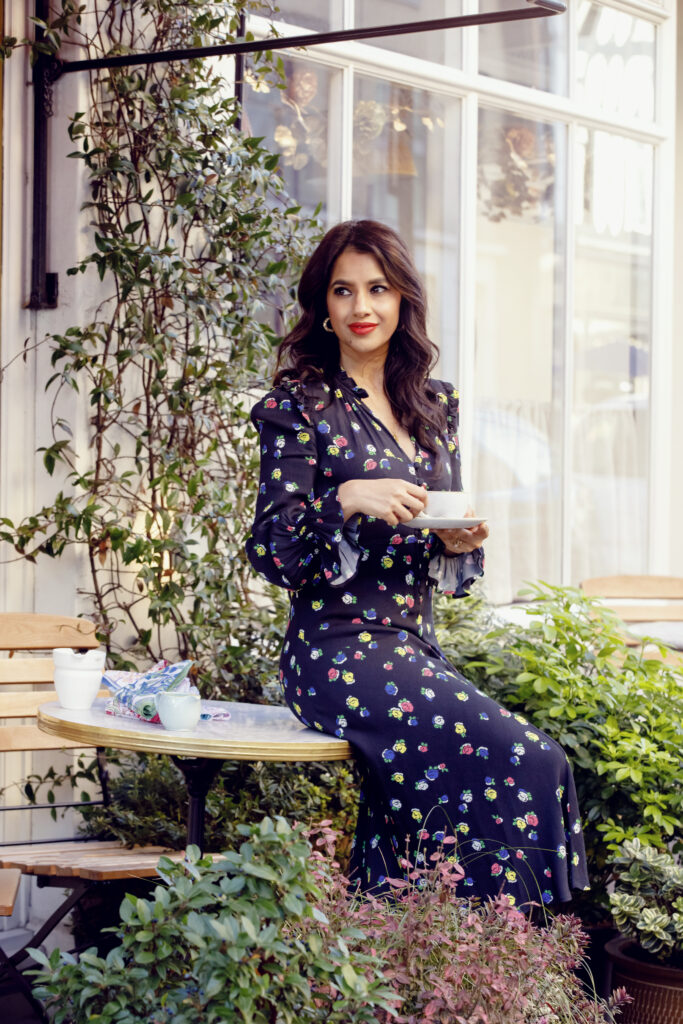
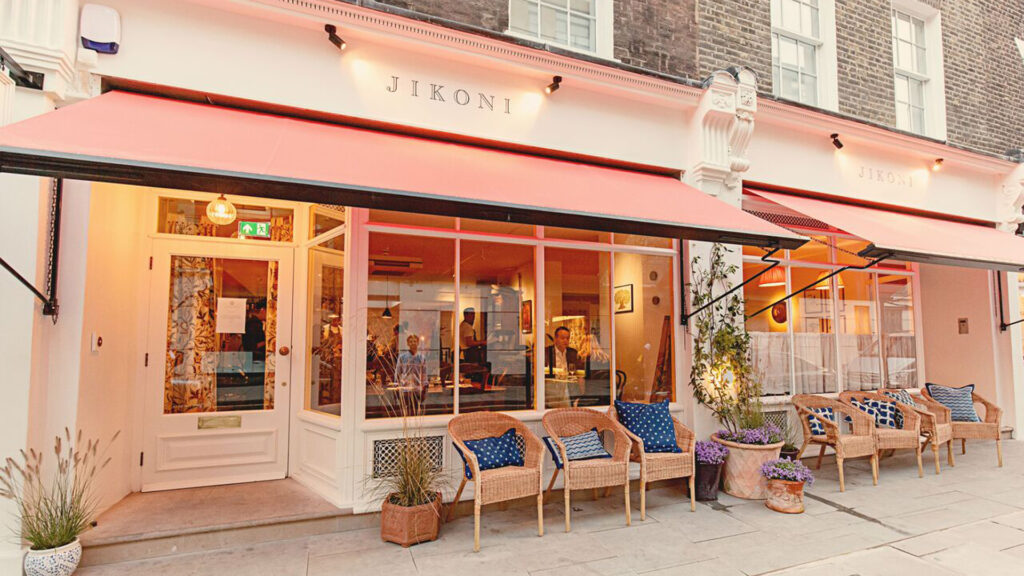
Ravinder Bhogal is a food writer, restaurateur, British chef, journalist and stylist. She opened her first restaurant Jikoni in Marylebone, London in September 2016. More on www. ravinderbhogal.com
(Galle Literary Festival 2025. More on www.galleliteraryfestival.com) (Nishaan I/2025)